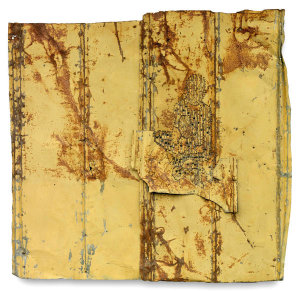
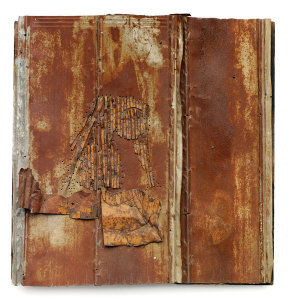

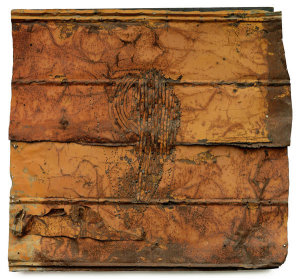
Ronald Lockett (1965–1998), Sarah Lockett's Roses, 1997
Tin and cut tin, nails, and enamel on wood, 51 x 48 1/2 x 1 1/2 in.; Souls Grown Deep Foundation
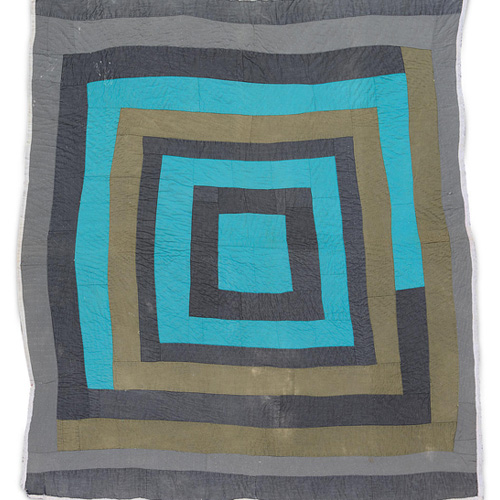
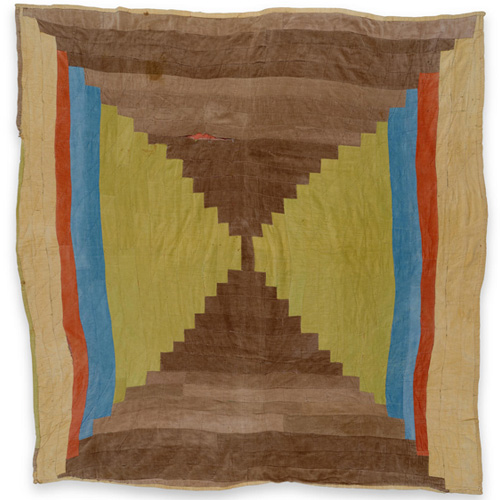
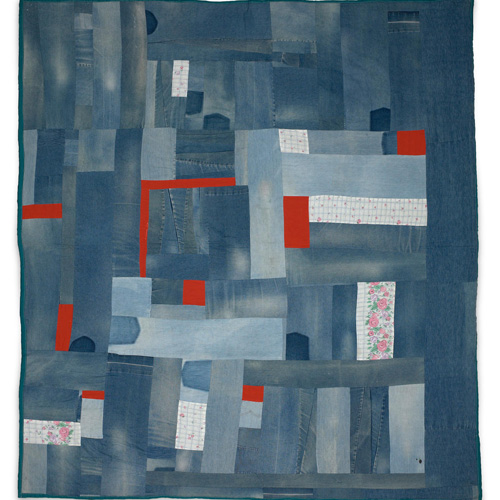
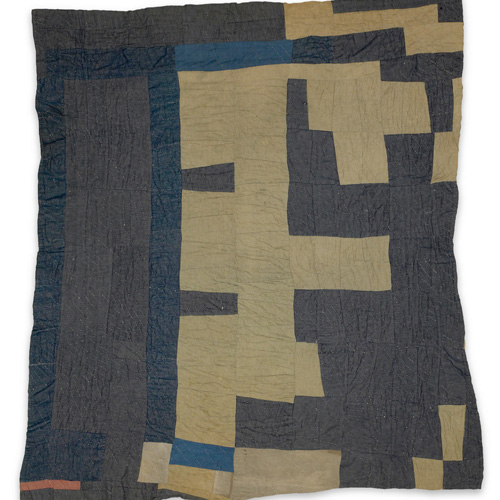
In this quilt-like work, Lockett memorializes Sarah Lockett, his neighbor and great-grandmother, who had raised three generations of Locketts and Dials, including Thornton Dial. In 1995, as Sarah’s health began to fail, Ronald Lockett and Thornton Dial became increasingly interested in quilts. She had been a quilter, and now both men were beginning to sift through her effects. Many of her quilts, like the vast majority of African American quilts, were patternless improvisations of fabric blocks, more like quilt "backs'' than stylized, formal patterns of quilt "fronts." Lockett began to consider the quilt a magic heirloom that tied together many generations in a shared language and process.
Ronald Lockett (1965–1998) was born in the Pipe Shop neighborhood of Bessemer, Alabama, where he lived his whole life. He graduated from high school but never pursued a traditional trade, having known since elementary school that he wanted to be an artist. Although he toyed with the idea of going to art school, he was dissuaded by his older cousin and neighbor, the artist Thornton Dial, who advised that he "had the best school of all just making artwork." Indeed, Lockett enjoyed an invaluable art education under the close mentorship of Dial, who allowed him to watch his process and offered him endless support.
Over the course of his decade-long career, Lockett produced hundreds of works of art that grappled with the horrors of the twentieth century, such as the Holocaust and Hiroshima, as well as personal matters, notably his great-aunt Sarah Dial Lockett’s death. Global and personal tragedy ultimately converged with his own diagnosis of HIV, and he died from AIDS-related pneumonia at the age of 32.
Ronald Lockett’s work is in the permanent collection of The Metropolitan Museum of Art, The National Gallery of Art, and the Fine Arts Museums of San Francisco, among others.
Learn more about Ronald Lockett here.